Ancient Ocean Predator
Default (GPT-3.5)

short orginal decription of megalodon
ChatGPT
The megalodon, an ancient and colossal predator of the oceans, ruled the seas millions of years ago. With its massive size and fearsome jaws lined with gigantic teeth, the megalodon was the ultimate apex predator. Its sheer presence and power instilled awe and terror in both creatures and humans alike, making it one of the most iconic and legendary creatures in paleontological history.

orginal decription of Acrocanthosaurus
ChatGPT
Acrocanthosaurus, a formidable predator from the Early Cretaceous period, was a striking and unique dinosaur. Characterized by its prominent high neural spines along its back, which gave it its name, this carnivorous giant possessed a distinctive silhouette. With a length of up to 40 feet and a weight that could exceed several tons, Acrocanthosaurus was a dominant force in its ecosystem. Its powerful jaws housed sharp teeth, adapted for tearing through flesh, and its robust limbs with sharp claws allowed it to capture and subdue its prey with remarkable agility. As a member of the theropod family, Acrocanthosaurus serves as a captivating example of prehistoric predator evolution.

best tags for dinosaur art on instagram
ChatGPT
#DinosaurArt
#PaleoArt
#DinoIllustration
#DinoSketch
#PrehistoricArt
#JurassicArt
#CretaceousCreatures
#DinosaurDrawing
#DinoPainting
#PaleontologyArt
#AncientBeasts
#DinoGallery
#FossilArt
#DinoSculpture
#DinoInk
#DinosaurDesign
#JurassicWorldArt
#CretaceousArt
#DinoInspired
#DinoFanArt
Remember that using a mix of popular and specific hashtags can help your dinosaur art reach a wider audience of enthusiasts and art appreciators on Instagram.

orginal decription of Inostrancevia
ChatGPT
Inostrancevia, a captivating creature of the Permian period, emerges as a remarkable apex predator in the ancient landscapes. This therapsid, characterized by its saber-like canines and robust build, presents an intriguing blend of reptilian and mammalian features. With its massive skull, short legs, and muscular body, Inostrancevia was well-equipped for a predatory lifestyle. Its fearsome teeth, resembling formidable daggers, reveal its role as a dominant carnivore in its ecosystem. Inostrancevia's existence provides a glimpse into the fascinating evolutionary transitions during a pivotal era in Earth's history, adding depth to our understanding of prehistoric life.

Original description of currently known Spinosaurus
ChatGPT
Spinosaurus, a captivating and enigmatic dinosaur of the Cretaceous period, stands out as a true icon of prehistoric life. Distinguished by its massive sail-like structure on its back, composed of elongated neural spines, this aquatic predator possesses an astonishing blend of adaptations for life in both water and on land. With a length that could reach up to 50-60 feet, Spinosaurus is one of the largest known carnivorous dinosaurs.
Its long and slender snout, akin to that of a crocodile, hints at its piscivorous diet, suggesting a specialization for hunting and consuming aquatic prey. Its strong arms, tipped with sharp claws, could potentially aid in catching fish or grasping onto prey. The sail on its back, possibly used for thermoregulation or display, further sets Spinosaurus apart as a unique and captivating dinosaur.
Despite its incredible stature and intriguing adaptations, much of Spinosaurus's story remains shrouded in mystery due to the scarcity of complete fossil evidence. As paleontologists continue to uncover and analyze new fossils, Spinosaurus promises to unveil more secrets about its ecology, behavior, and place in the ancient world, solidifying its position as a symbol of the ever-evolving narrative of prehistoric life.

orginal decription of kentrosaurus
ChatGPT
Kentrosaurus, a captivating inhabitant of the Late Jurassic period, showcases a distinctive and formidable appearance in the world of dinosaurs. Characterized by its intricate arrangement of sharp spikes and plates along its back and tail, this herbivorous stegosaurid stands as a remarkable example of prehistoric defensive adaptations.
With a length of around 15 feet, Kentrosaurus was a moderately-sized dinosaur. Its double row of spikes running down its back and the paired spikes on its tail were likely used for defense against predators or for intra-species interactions. These spikes, along with its bony plates, created a formidable deterrent for potential threats.
Kentrosaurus's relatively small head, adorned with a beak and grinding teeth, indicate its herbivorous diet, primarily consisting of plants and vegetation. Its robust body and four sturdy legs further emphasize its grounding in a quadrupedal lifestyle.
Though somewhat overshadowed by its larger relative, the Stegosaurus, Kentrosaurus presents a fascinating case of adaptation and evolution within the stegosaur family. As an important piece of the prehistoric puzzle, Kentrosaurus adds depth to our understanding of ancient ecosystems and the diverse range of creatures that once roamed the Earth.

orginal decription of tyrannosaurus rex
ChatGPT
Tyrannosaurus rex, the "Tyrant Lizard King," is perhaps the most iconic and awe-inspiring predator from the Late Cretaceous period. With its massive size, fearsome appearance, and undeniable presence, T. rex reigns as the epitome of a carnivorous dinosaur.
Measuring up to 40 feet in length and standing around 15 feet tall, T. rex was an apex predator with a massive skull, filled with sharp teeth that could exceed 6 inches in length. Its strong jaws and powerful bite force were designed to crush bone, allowing it to consume both meat and marrow.
T. rex's relatively short arms have sparked much speculation and debate among paleontologists, with theories ranging from assisting in grasping prey to playing a role in mating rituals. Its sturdy hind limbs, however, are considered one of the most powerful and efficient in the dinosaur kingdom, allowing it to reach impressive speeds despite its colossal size.
This iconic predator likely scavenged as well as hunted, taking advantage of its role as a top carnivore in its ecosystem. Its distinctively small, two-fingered forelimbs and massive head adorned with tiny, serrated teeth make T. rex instantly recognizable and eternally fascinating to both scientists and the public alike.

best and original descritpion of tylosaurus
ChatGPT
Tylosaurus, a magnificent marine reptile of the Late Cretaceous oceans, commands attention with its impressive length and streamlined form. Belonging to the mosasaur family, Tylosaurus exemplifies the apex of aquatic adaptation, showcasing a combination of reptilian traits and marine prowess.
Measuring up to 40-50 feet in length, Tylosaurus was a true leviathan of its time. Its elongated body, propelled by powerful flippers, allowed it to navigate the ancient seas with grace and speed. Its snake-like neck, equipped with sharp teeth, could swiftly snatch fish and other prey in its underwater realm.
The hallmark feature of Tylosaurus is its elongated, pointed snout, which sets it apart from other mosasaurs. This specialized snout, adorned with formidable teeth, was well-suited for hunting agile aquatic prey. Its powerful jaws could deliver swift and precise strikes, making it a dominant predator of its ecosystem.
As a top marine predator, Tylosaurus played a vital role in the ancient oceans, balancing the delicate dynamics of the prehistoric underwater world. Its captivating blend of adaptation and evolution showcases the incredible diversity of life that once thrived in Earth's watery depths.

original descritpion of livaytan
ChatGPT
Livyatan, a colossal apex predator of the Miocene oceans, emerges as a fascinating and awe-inspiring marine creature. Belonging to the family of prehistoric whales known as sperm whales, Livyatan stands as a testament to the ancient giants that once roamed the seas.
With an estimated length of up to 50-60 feet, Livyatan rivaled the size of modern sperm whales. Its most striking feature is its immense, robust skull, housing a set of massive teeth that could reach over a foot in length. These formidable teeth, resembling those of a giant predatory shark, speak to its role as an apex predator in its marine ecosystem.
Livyatan's evolutionary adaptations are a blend of its marine heritage and predatory prowess. Its strong flippers and streamlined body suggest a creature adapted to fast and agile movement in pursuit of prey. As a top predator, Livyatan likely targeted a range of marine creatures, utilizing its powerful bite to capture and subdue its quarry.
This prehistoric leviathan adds depth to our understanding of the complex and diverse marine ecosystems that flourished millions of years ago. Livyatan's imposing presence and unique characteristics make it a captivating subject for the study of ancient marine life and evolution.

original descritpion of purussaurus
ChatGPT
Purussaurus, a colossal crocodilian from the Miocene epoch, commands attention with its impressive size and remarkable adaptations. This prehistoric predator inhabited the waterways of South America, leaving behind a legacy of awe-inspiring proportions and adaptations.
Measuring up to 40-45 feet in length, Purussaurus was among the largest crocodilians to have ever existed. Its robust body, equipped with powerful limbs and a massive tail, hints at its proficiency as both an aquatic predator and a proficient swimmer.
Purussaurus's formidable skull, featuring rows of sharp teeth, reveals its role as a top predator in its environment. Its immense size and crushing bite force allowed it to hunt a variety of prey, from large fish to other aquatic creatures that shared its ancient ecosystem.
This prehistoric crocodilian's presence adds depth to the intricate web of life in the prehistoric waterways. As a dominant predator, Purussaurus played a crucial role in maintaining the balance of its ecosystem, shaping the dynamics of its time. Its remarkable adaptations and imposing stature make it a captivating subject for the study of ancient reptilian life.

description of a intuitive birthchart reading
ChatGPT
An intuitive birthchart reading is a deeply personalized and insightful exploration of an individual's astrological birth chart, guided by an intuitive and empathetic perspective. In this type of reading, the astrologer not only interprets the positions of the planets, signs, and houses in the birth chart but also taps into their intuition to offer a more holistic and empathic understanding of the person's unique energy and life journey.
The astrologer begins by analyzing the traditional elements of the birth chart, such as the sun sign, moon sign, rising sign, and planetary placements. However, the intuitive approach goes beyond these standard interpretations to delve into the subtler aspects of the chart that might not be immediately apparent.
Intuition comes into play when the astrologer senses underlying themes, emotions, and energies that resonate with the individual's life experiences and current challenges. This can involve picking up on patterns that may not be readily visible in the chart alone, connecting the dots between seemingly unrelated placements, and identifying potential areas of growth and transformation.
An intuitive birthchart reading also takes into account the person's emotional and spiritual well-being. The astrologer might provide guidance on how to harness certain planetary energies, navigate personal obstacles, and capitalize on opportunities for personal development.
Ultimately, an intuitive birthchart reading aims to provide a compassionate and empathetic perspective on the individual's astrological makeup. It goes beyond predicting events and offers a deep understanding of the person's soul journey, helping them gain clarity, validation, and a renewed sense of purpose. This type of reading can be especially valuable for those seeking a more introspective and holistic approach to astrology that aligns with their personal growth and spiritual path.

short description of a decription of a birthchart reading
ChatGPT
A birthchart reading is an insightful analysis of an individual's astrological birth chart. It involves interpreting the positions of the planets, signs, and houses at the time of their birth to provide insights into their personality traits, strengths, challenges, and life path. The reading offers a personalized snapshot of how celestial bodies influence different areas of their life, such as relationships, career, and personal growth. Astrologers use this information to provide guidance and self-discovery, helping individuals better understand themselves and make informed decisions based on the energies depicted in their birth chart.

original descritpion of pentaceratops
ChatGPT
Pentaceratops, a captivating inhabitant of the Late Cretaceous period, stands out as a majestic and unique member of the ceratopsid dinosaur family. Recognized for its distinct appearance, this herbivorous giant showcases an awe-inspiring arrangement of facial adornments.
Measuring around 20-23 feet in length and weighing several tons, Pentaceratops boasts a massive frill at the back of its skull, adorned with five prominent spikes that lend it its name. This impressive frill, combined with its large, hooked beak and powerful jaws, indicates adaptations for feeding on fibrous plants and vegetation.
The horns on Pentaceratops vary from individual to individual, with some specimens displaying short brow horns and others featuring longer ones. These horns, coupled with the formidable frill, could have served various purposes, such as defense against predators, competition within the species, or even display during mating rituals.
Pentaceratops's robust build and quadrupedal stance suggest a creature well-suited to a terrestrial lifestyle. Its ornate cranial features add depth to our understanding of dinosaur diversity and evolution, illustrating the incredible range of adaptations that once graced the prehistoric world.

original descritpion of sarcosuchus
ChatGPT
Sarcosuchus, an awe-inspiring inhabitant of the Cretaceous period, emerges as a colossal and formidable predator of ancient waterways. This prehistoric crocodile, often referred to as the "SuperCroc," presents a unique blend of reptilian traits and staggering proportions.
Measuring up to an astonishing 36-40 feet in length, Sarcosuchus reigned as one of the largest crocodile-like creatures to ever exist. Its elongated and powerful snout, lined with a multitude of sharp teeth, hints at its specialization as an apex predator in aquatic environments.
Sarcosuchus's robust and heavily-armored body allowed it to navigate the waters with remarkable efficiency. Its immense size and well-developed limbs, adapted for both swimming and ambushing prey, underscore its position as a dominant force in its ecosystem.
The discovery of Sarcosuchus fossils has shed light on the diverse and often surprising forms life took during the prehistoric ages. This ancient superpredator's presence adds depth to our understanding of the complex interactions between species in the Cretaceous waterways, offering a glimpse into a world where massive reptiles ruled the waters with undeniable power and grace.

original descritpion of giganotosaurus
ChatGPT
Giganotosaurus, a captivating inhabitant of the Late Cretaceous period, emerges as a fearsome and awe-inspiring predator of the ancient landscapes. This massive carnivore, often referred to as the "Giant Southern Lizard," commands attention with its impressive size and powerful presence.
Measuring up to approximately 40-45 feet in length, Giganotosaurus ranks among the largest terrestrial predators to ever roam the Earth. Its robust body, supported by muscular limbs, suggests an adept and agile hunter, capable of chasing down and subduing its prey with strategic precision.
Giganotosaurus's imposing skull, housing serrated teeth that could reach over 8 inches in length, speaks to its role as an apex predator. Its sharp senses, coupled with a keen intelligence, may have allowed it to effectively target and capture a variety of dinosaurs that shared its prehistoric environment.
This awe-inspiring predator's existence adds depth to our understanding of the intricate web of life during the Late Cretaceous. Giganotosaurus's dominance as a top predator underscores its crucial role in shaping the dynamics of its ecosystem, where survival hinged on both brute strength and strategic prowess.

orginal decription of apatosaurus
ChatGPT
Apatosaurus, a captivating denizen of the Late Jurassic period, emerges as a colossal and gentle giant of prehistoric landscapes. Also known as "Brontosaurus" in the past, this iconic long-necked dinosaur presents a mesmerizing image of ancient herbivorous life.
Measuring up to an astonishing 70-90 feet in length, Apatosaurus commands attention with its impressive size. Its distinguishing feature is its lengthy neck, which allowed it to reach vegetation in towering trees and graze on plants that other herbivores couldn't access.
Apatosaurus's robust and sturdy body was supported by four massive legs, hinting at its quadrupedal lifestyle. Its long tail, counterbalancing its neck, may have served as a formidable weapon against predators.
Despite its colossal size, Apatosaurus was likely a peaceful herbivore, relying on its immense size and herding behavior for defense against threats. Its massive size and distinctive silhouette make it a symbol of the grandeur and diversity of prehistoric life, leaving a lasting impression of the gentle giants that once roamed our planet.

orginal decription of carnotaurus
ChatGPT
Carnotaurus, a striking inhabitant of the Late Cretaceous period, emerges as a unique and formidable predator of prehistoric landscapes. Recognized for its distinctive features, this carnivorous dinosaur presents a captivating image of evolutionary adaptation.
Measuring around 25 feet in length, Carnotaurus boasts a robust build and a set of intriguing characteristics. Its most iconic feature is a pair of small, horn-like projections above its eyes, giving it a distinctive appearance. These horns, along with its deep skull and powerful jaws, suggest a specialized predatory strategy.
Carnotaurus's name, meaning "meat-eating bull," reflects its predatory nature. Its strong hind limbs, adapted for swift running, hint at its ability to chase down prey with remarkable speed. However, its short, T. rex-like arms raise questions about their role and functionality, adding to the mystery of this carnivorous marvel.
Despite the enigmatic nature of Carnotaurus, its existence adds depth to our understanding of the diverse predators that once roamed Earth. This distinctive predator's presence serves as a reminder of the remarkable variety of life forms that once thrived in prehistoric ecosystems.

orginal description of Ophthalmosaurus
ChatGPT
Ophthalmosaurus, an enchanting resident of the Late Jurassic seas, emerges as a captivating example of ancient marine reptiles. This ichthyosaur, renowned for its streamlined body and unique eye adaptations, paints a vivid picture of life in prehistoric oceans.
Measuring around 10-13 feet in length, Ophthalmosaurus showcases a hydrodynamic form optimized for agile swimming. Its elongated body, resembling that of a modern dolphin, suggests a creature well-suited for efficient movement through the water.
Ophthalmosaurus's most remarkable feature is its oversized eyes, which were among the largest of any known vertebrate. These large eyes indicate adaptations for improved vision in deep-water environments, where light penetration might have been limited. This unique trait also adds an air of mystery to this ancient inhabitant of the seas.
Equipped with powerful flippers and a slender tail, Ophthalmosaurus is thought to have been a proficient hunter, chasing down agile prey such as fish and squid. Its existence offers a glimpse into the intricate relationships that once thrived in the ancient oceans, as well as the remarkable adaptations that allowed marine life to flourish in a variety of ecological niches.

orginal description of styracosaurus
ChatGPT
Styracosaurus, a captivating inhabitant of the Late Cretaceous period, emerges as a formidable and fascinating member of the ceratopsid dinosaur family. Recognized for its intricate cranial adornments, this herbivorous giant provides a glimpse into the diverse world of prehistoric creatures.
Measuring around 18-20 feet in length, Styracosaurus commands attention with its distinctive appearance. Its most striking feature is its elaborate frill at the back of its skull, adorned with a symphony of sharp spikes and horns. The centrally positioned horn, resembling a formidable nose horn, sets it apart from its relatives.
Styracosaurus's powerful beak and array of dental adaptations hint at its herbivorous diet, likely consisting of a mix of vegetation and plants. Its robust body, supported by sturdy limbs, suggests a quadrupedal lifestyle well-suited to its terrestrial environment.
The ornate cranial features of Styracosaurus add depth to our understanding of dinosaur diversity and evolution, highlighting the remarkable adaptations that once graced Earth's prehistoric landscapes. Its distinctive silhouette and unique cranial array serve as a testament to the intriguing variety of life that once roamed our planet.

orginal description of ankylosaurus
ChatGPT
Ankylosaurus, a captivating inhabitant of the Late Cretaceous period, emerges as a remarkable and armored marvel of prehistoric life. Recognized for its distinct features, this herbivorous giant offers a glimpse into the ancient world of dinosaurs.
Measuring around 20-30 feet in length, Ankylosaurus commands attention with its robust and heavily armored body. Its most iconic feature is its thick bony plates, called osteoderms, that covered its back and flanks, providing protection against predators.
Ankylosaurus's most impressive defense mechanism is its massive tail club, tipped with a dense and heavy knob of bone. This tail club could deliver devastating blows to deter predators, showcasing its ability to fend off attackers with both its armor and weaponry.
Its low-slung body, short legs, and beak-like mouth suggest a herbivorous diet primarily consisting of plants and vegetation. Its unique adaptations and sturdy build allowed it to thrive in the diverse ecosystems of the Late Cretaceous, offering a prime example of prehistoric creatures adapting to their environment.
Ankylosaurus's existence adds depth to our understanding of the intricate web of life during this ancient period. Its unmistakable armored appearance and specialized defensive adaptations make it an enduring symbol of the incredible diversity that once roamed the Earth.

Original description of nothosaurus
ChatGPT
Nothosaurus, an intriguing inhabitant of the Triassic seas, emerges as a captivating and adaptable marine reptile of prehistoric times. This creature, recognized for its aquatic lifestyle, offers insights into the evolution of marine life.
Measuring around 6 to 13 feet in length, Nothosaurus showcases a streamlined body built for efficient swimming. Its elongated torso, sleek limbs, and paddle-like feet indicate a lifestyle well-suited for maneuvering through ancient ocean currents.
Nothosaurus's most distinctive feature is its elongated snout, equipped with sharp teeth. This adaptation suggests a carnivorous diet, where it likely preyed upon a variety of marine creatures. Its large eyes indicate an ability to navigate the depths in search of prey.
Equipped with both terrestrial and aquatic adaptations, Nothosaurus exemplifies the transitions that occurred as certain reptiles ventured into marine habitats. Its existence offers a glimpse into the intricate relationships that once thrived in the ancient seas, as well as the remarkable adaptability that allowed prehistoric life to explore and conquer diverse ecological niches.

orginal description of Psittacosaurus
ChatGPT
Psittacosaurus, a captivating inhabitant of the Early Cretaceous period, emerges as a unique and endearing member of the dinosaur family. Recognized for its distinctive appearance, this herbivorous creature offers insights into the diversity of prehistoric life.
Measuring around 6 to 7 feet in length, Psittacosaurus commands attention with its compact body and intriguing features. Its most remarkable aspect is its array of elongated quills extending from its tail, providing a whimsical and striking visual element.
Psittacosaurus's beak-like mouth and specialized teeth suggest a herbivorous diet primarily composed of plants and vegetation. Its bipedal stance, coupled with sturdy hind limbs and shorter forelimbs, hints at its agile movement and ability to navigate its environment with precision.
The intriguing patterns of coloration and texture found in Psittacosaurus fossils further enhance its allure, offering glimpses into the potential vibrancy of prehistoric creatures. Its unique features and adaptations make it a valuable piece of the puzzle in understanding the evolving ecosystem of the Early Cretaceous period and the variety of life that flourished during that time.

orginal description of Daeodon
ChatGPT
Daeodon, a fascinating denizen of the Miocene epoch, emerges as a formidable and captivating member of prehistoric mammals. Also known as "Entelodon," this large omnivorous creature offers a glimpse into the complex and diverse world of ancient mammals.
Measuring around 6 to 8 feet in length and standing approximately 4 to 5 feet tall at the shoulder, Daeodon commands attention with its impressive size. Its stocky build and powerful limbs suggest a creature adapted for both strength and agility, while its distinctive head shape and crests hint at its unique anatomy.
Daeodon's most notable features are its robust jaws and sharp teeth, which indicate its omnivorous diet. It likely consumed a mix of plant matter and animal prey, showcasing its adaptability in various ecosystems.
The discovery of Daeodon fossils has illuminated the intricate web of life in the Miocene epoch, highlighting the diverse range of mammals that once roamed the ancient landscapes. This enigmatic creature's presence adds depth to our understanding of the relationships and adaptations that shaped the prehistoric world, offering a glimpse into an era where unique mammals held their own among the evolving tapestry of life.

origional description of bolong
ChatGPT
I'm sorry, but as of my last knowledge update in September 2021, I'm not familiar with an entity or creature named "bolong." It's possible that this is a term or concept that has emerged or become known after that date. If you could provide me with more context or details about what "bolong" refers to, I'd be happy to help if I can.

orginal description of the dinosaur Bolong
ChatGPT
As of my last knowledge update in September 2021, I am not aware of a dinosaur species named "Bolong." It's possible that this species has been discovered or named after that time. If "Bolong" is indeed a newly identified dinosaur, I wouldn't have information about it in my current database.
If you could provide more context or details about this dinosaur, such as its characteristics, time period, or any recent discoveries, I would be happy to try to provide a description based on that information.

Original description of maip microthorax
ChatGPT
As of my last knowledge update in September 2021, I'm not familiar with the specific dinosaur species "Maip microthorax." It's possible that this is a species that has been discovered or named after that time. If "Maip microthorax" is indeed a newly identified dinosaur, I wouldn't have information about it in my current database.
If you could provide more context or details about this dinosaur, such as its characteristics, time period, or any recent discoveries, I would be happy to try to provide a description based on that information.

Description of megaraptors
ChatGPT
Megaraptors, a group of theropod dinosaurs, emerge as a captivating and enigmatic lineage within the prehistoric world. Though not as well-known as some other dinosaur groups, they offer a fascinating glimpse into the diverse array of carnivorous creatures that once roamed the Earth.
Megaraptors are characterized by their large size, reaching lengths of up to 25 feet or more. Their long, slender skulls house sharp teeth, indicating their role as carnivorous predators. One of the most distinctive features of megaraptors is the presence of a large sickle-shaped claw on their second toe. This claw, often referred to as the "killer claw," suggests that megaraptors employed this specialized appendage for hunting and capturing prey.
Despite their imposing appearance, much about megaraptors remains shrouded in mystery due to the scarcity of fossil evidence. They are thought to have lived during the Late Cretaceous period and likely occupied a predatory niche within their ecosystems. Their unique characteristics, including the distinctive claw, set them apart as a group of predators with adaptations that differentiated them from other theropods.
While our understanding of megaraptors continues to evolve with new discoveries and research, they serve as a reminder of the ever-changing nature of paleontological knowledge and the intricate diversity of life that once thrived on our planet.

Orginal description of Beipiasaurus
ChatGPT
Beipiasaurus, a captivating inhabitant of the Early Cretaceous period, emerges as a fascinating and important discovery in the realm of paleontology. This small, feathered dinosaur provides insights into the evolution of avian features within non-avian dinosaurs.
Measuring about 3 to 4 feet in length, Beipiasaurus showcases a compact and agile build. Its most distinctive feature is the presence of fossilized feathers, which offer a remarkable connection between dinosaurs and modern birds.
Beipiasaurus's feathered coat suggests an early stage of feather evolution, where feathers may have served multiple purposes beyond just flight. These protofeathers could have provided insulation, camouflage, or even played a role in social displays.
While Beipiasaurus's exact role in its ecosystem is still being explored, its presence serves as a reminder of the complex and interconnected nature of prehistoric life. The discovery of feathered dinosaurs like Beipiasaurus has revolutionized our understanding of the dinosaur-bird connection and continues to shape our appreciation of the evolutionary journey that has led to the diverse avian life we see today.

Original description of microraptor
ChatGPT
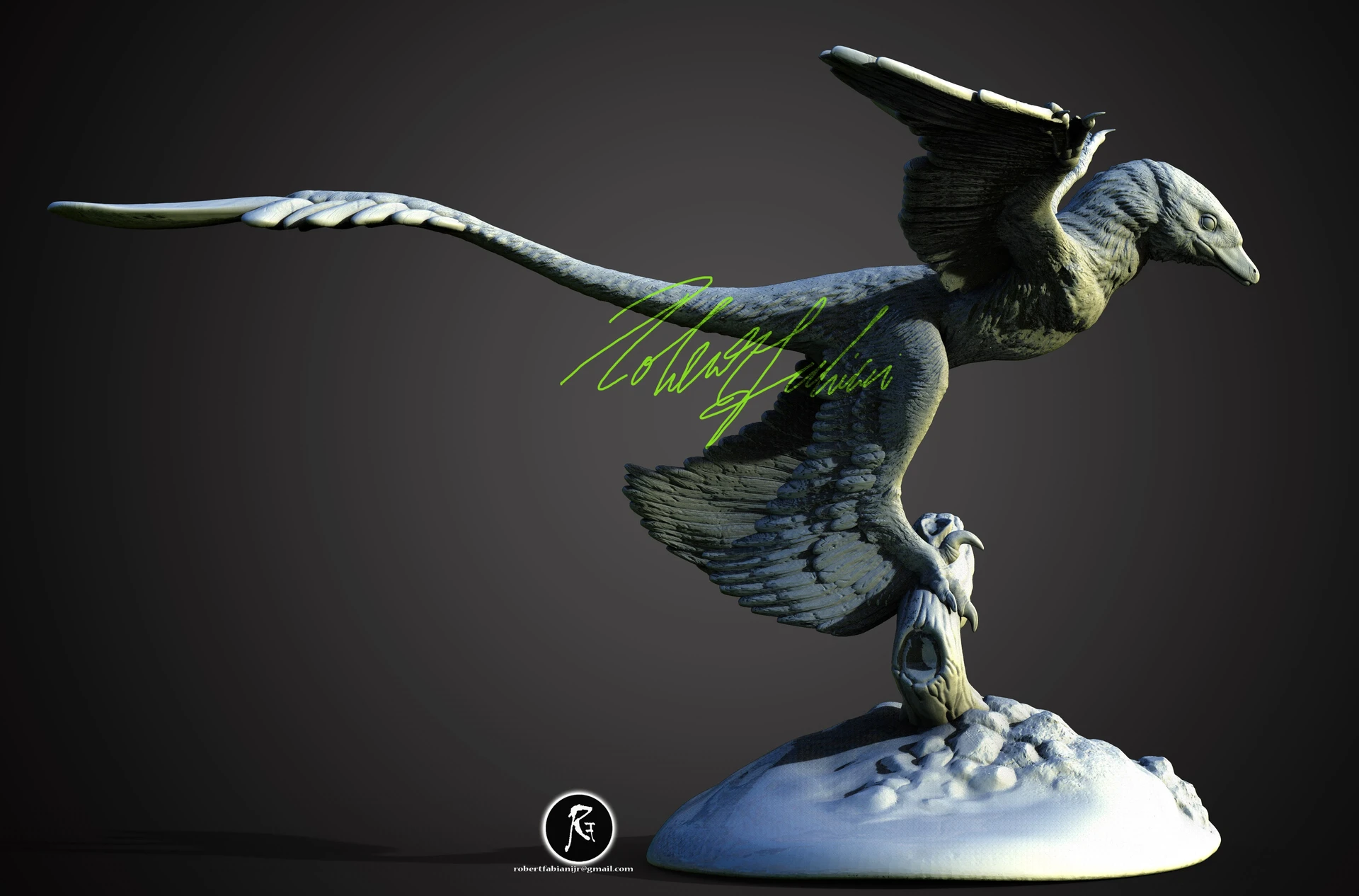
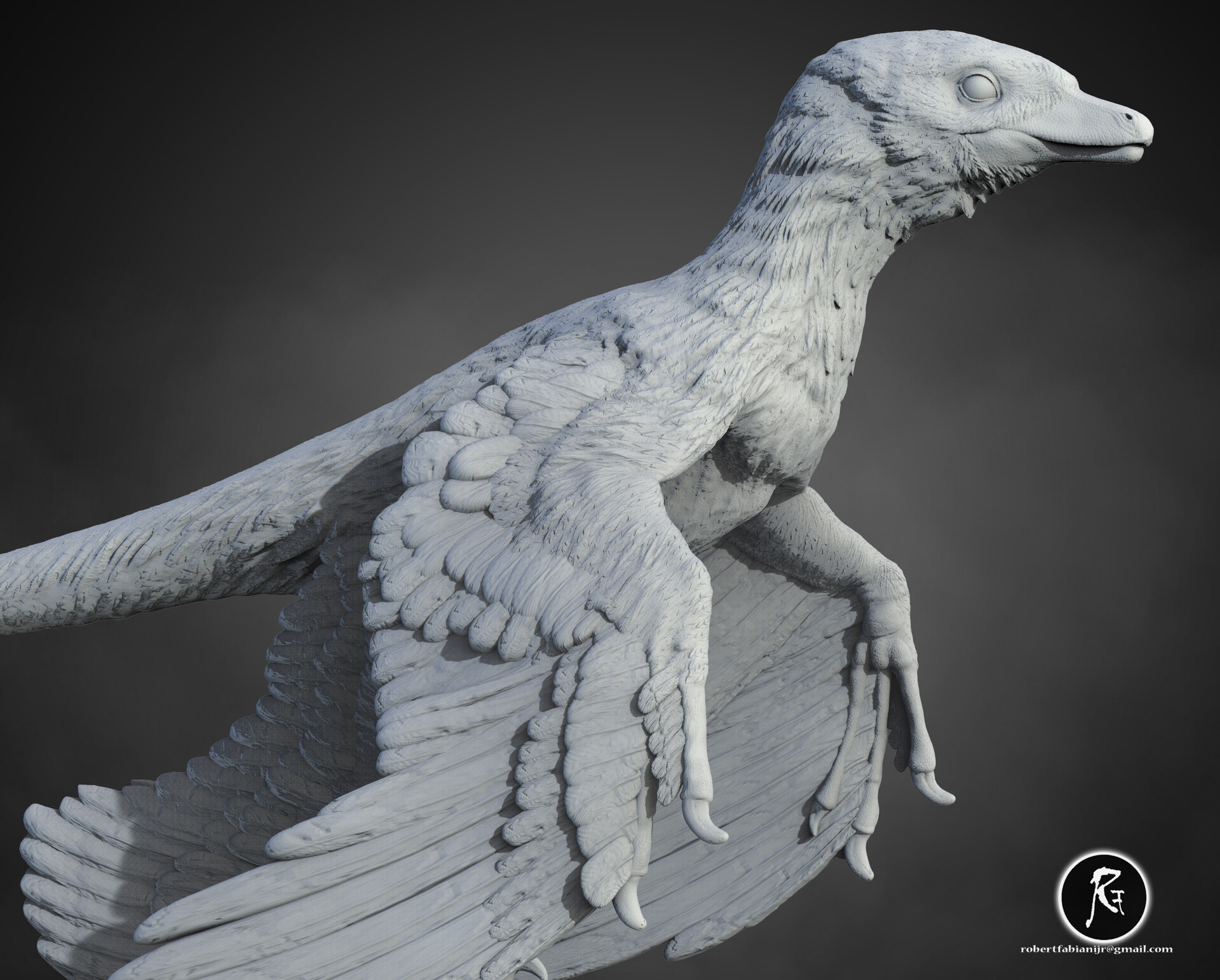
Microraptor, a captivating inhabitant of the Early Cretaceous period, emerges as a stunning and intricate link between dinosaurs and birds. This small, feathered dinosaur presents a remarkable example of evolutionary transitions within the dinosaur lineage.
Measuring about 2 to 3 feet in length, Microraptor boasts a compact and streamlined body, well-suited for agile movement. Its most striking feature is the presence of well-preserved feathers, which showcase an exquisite array of feather types on both its arms and legs.
Microraptor's feathered limbs suggest its potential for gliding or even powered flight, making it a crucial piece of evidence in understanding the shift from terrestrial dinosaurs to modern birds. This transitional dinosaur serves as an awe-inspiring snapshot of the stages through which feathers evolved for both insulation and aerodynamic purposes.
As an inhabitant of ancient ecosystems, Microraptor offers insights into the delicate balance of life during the Early Cretaceous. Its presence enhances our understanding of the connections between avian and non-avian dinosaurs, underscoring the intricate paths that led to the remarkable diversity of life on Earth.